What Is the State of Your Oil?
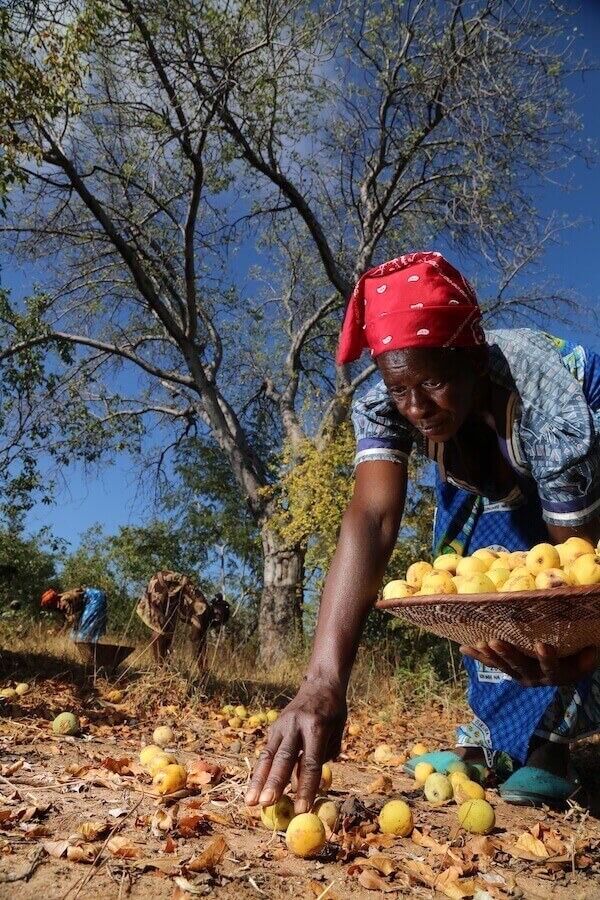
Southern Africa offers a rich variety of botanical oils, from Marula seed, Kalahari Melon seed, Baobab seed and Macadamia nut. Each oil reflects its origin, flavour and use. The way these oils are processed, from seed to bottle, greatly affects their aroma, colour, shelf life, nutrients and even the story you share with your customers.
While some ingredients are created in the lab, botanical oils are the slow, patient result of ecosystems and time. Today’s consumers and formulators prize these botanicals for their naturalness and the “healthy” label they carry, often tied to emotional well-being and a desire to return to simple, authentic sources. Their role in flavour, nutrition and healing stretches back centuries. From the ritual of fragrant herbal infusions to the traditional use of seeds, roots and flowers as medicines, botanical oils carry stories and benefits that modern processing should aim to preserve – especially for Southern African treasures like Marula, Kalahari Melon and Baobab.
That respect for place and origin has sparked a more exacting search for quality. Buyers no longer accept a pretty label alone; they look for traceability to soil and season, transparent relationships with harvesters and production methods that keep the oil as close to the living plant as possible. For Southern African oils, this means paying attention to everything from when and how seeds are collected, to whether farmers practice regenerative land use, to how quickly the seed is processed after harvest. These factors shape the oil’s scent, colour, nutrient profile and performance in a formulation.
In short, its authenticity.
Quality also now carries ethical and environmental weight. Conscious brands want suppliers who care for landscapes and communities and who minimise waste, energy use and chemical inputs. That is why extraction choices matter: they determine whether an oil reads as raw and botanical or as neutral and industrial. The right extraction protects the subtle fatty-acid balance, preserves delicate antioxidants and maintains the tiny molecules that give an oil its signature “feel” and aroma; the very qualities that link a bottle back to a place, a season and a people.
The real question becomes: once nature has done its slow, careful work, how do we extract these oils without stripping away what makes them valuable in the first place? The answer lies in the extraction method and the journey begins with the most traditional and least intrusive approach:
- Cold-Pressed Extraction
What is Cold-Pressed Extraction?
Cold-pressing is a mechanical method: seeds, nuts or fruit are crushed and pressed to squeeze out the oil without intentionally applying high temperature or chemical solvents. The goal is to keep extraction temperatures low so delicate compounds, natural aromas, vitamins and antioxidant molecules are preserved. Industrial definitions vary by region, but cold-pressing emphasises minimal heat and the absence of solvents.
Common Uses of Cold-Pressed Extraction
Cold-pressed oils are the go-to for culinary speciality oils (think premium olive, macadamia and nut oils), body care and hair oils, and high-value cosmetic ingredients where intact nutrient content and natural aroma matter. They are favoured by artisan brands and consumers who want “as close to the plant as possible” products.
Advantages of Cold-Pressed Extraction
- Preserves native phytochemicals (vitamin E, carotenoids, phenolics) that give oils their therapeutic and sensory value.
- No chemical solvents – cleaner label and simpler ingredient declaration.
- Lower processing complexity and often lower capital cost versus high-pressure systems.
- Good fit for small-scale and sustainable supply chains, making it ideal for many Southern African producers.
- Polished Extraction (or “Polishing” as a Finishing Step)
Note: “polished” is not typically a primary extraction method, such as pressing or supercritical extraction. In oil processing, polishing most commonly refers to a finishing/purification stage that improves clarity and removes trace contaminants, essentially a last-pass filtration or conditioning step.
What is Polishing Extraction?
Polishing is a finishing technique applied to already-extracted oil. It can include fine filtration, adsorbent passes, or regenerative treatments designed to remove residual particles, colour, odour, or other trace impurities, making the oil visually and chemically more uniform.
Common Uses of Polishing
Polishing is used across industries: transformer and lube oils (to meet technical specifications), edible oils (final clarity), and some cosmetic or industrial botanical oils, where visual appearance and stability are critical.
Advantages of Polishing
- Improves clarity and shelf appeal.
- Removes residual impurities that could affect stability or performance.
- Helps meet regulatory or technical specifications for industrial uses.
- Refined Extraction (Edible/Industrial Refining)
What is Refined Extraction?
“Refining” refers to after-press treatments applied to crude oil: degumming, neutralisation, bleaching, deodorisation and sometimes winterisation, essentially a set of chemical and thermal operations to remove free fatty acids, pigments, gums, odorants and other undesirables so the oil becomes neutral in smell, colour and taste. This is the standard pipeline for commodity edible oils.
Common Uses of Refined Extraction
Refined oils are widely used in food manufacturing, industrial applications, and products that require neutral-flavoured, long-shelf-stable oil (e.g., cooking oils, margarines, many personal-care bases).
Advantages of Refined Extraction
- Neutral flavour and long shelf-life – easier to formulate into food and large-scale cosmetics.
- Consistent appearance and stability across batches.
- Removes allergens, off-odours and some impurities, making oils more broadly usable in manufacturing.
- Winterised Extraction (Winterisation/Winterising)
What is Winterisation Extraction?
Winterisation (or winterising/winterised) is a cold-fractionation step used to remove waxes, higher-melting triglycerides and other solids that can cloud oils at low temperatures. The crude oil is dissolved (often in ethanol), chilled to precipitate waxes, then filtered to keep the remaining oil liquid and clear at cooler temperatures. It is not a primary extraction method but a refinement step focused on appearance and mouthfeel.
Common Uses of Winterisation
- Hemp and botanical extracts to prevent cloudiness in tinctures and emulsions.
- Edible speciality oils where clarity at refrigeration temperatures is required.
- Cosmetic oils destined for serums or fine emulsions that must remain clear.
Advantages of Winterisation
- Removes waxes that cause cloudiness or a gritty feeling.
- Improves stability and consumer perception (clear oils look more refined).
- Enables certain applications (like cold-filled cosmetics or beverages) by preventing solid deposition.
What is CO₂ Extraction?
CO₂ extraction uses supercritical carbon dioxide (CO₂ pressurised and heated until it behaves like both a liquid and a gas) as a tunable solvent to pull desirable botanical compounds from plant material. By adjusting temperature and pressure, you can target different compound classes; the CO₂ is then depressurised and recycled, leaving a solvent-free extract. Technically sophisticated and highly controllable.
Common Uses of CO₂ Extraction
CO₂ is widely used for high-value essential oils, aromatics, and botanicals when you want broad compound profiles (including heavier, less-volatile components) without residual chemical solvent. It is frequently used in perfumery, nutraceutical extracts and speciality aromatherapy materials.
Advantages of CO₂ Extraction
- Selective and tunable – operators can target specific compounds by changing pressure/temperature.
- Produces solvent-free, concentrated extracts with rich aromatic profiles.
- Gentle on heat-sensitive constituents compared with high-temperature distillation.
Key Differences
What Extraction Method Is the Most Effective?
“Most effective” depends on your goal. To preserve a botanical oil’s natural profile (flavour, aroma, nutrients), minimise processing, and maintain a low-tech, local supply chain, cold-pressed often wins. For highly selective extraction of specific compounds (e.g., a single terpene fraction), CO₂ can be more “effective”. For neutral, commodity oils with long shelf life, refining is most effective.
But if you are talking about the most broadly valuable method for Southern African edible and cosmetic botanical oils, where the impact on climate, bioactive content and sustainability matter, cold-pressed is the most effective overall.
How we at Afrika Botanicals define as the best
We rank extraction methods against five parameters. Below is how each method stacks up in our view.
- Natural (clean-label, minimal processing)
- Cold-Pressed: Tops the list – mechanical, solvent-free and minimal refinement.
- Polished: Can be consistent with “natural” if polishing is physical filtration, but may involve adsorbents.
- Refined and Winterised: Less “natural” by clean-label standards because of chemicals/solvents and heat.
- CO₂: Solvent-free final product and can be marketed as “clean,” but it is a high-tech process that some consumers perceive as less “artisanal.”
- Quality (nutrient, aroma, active compounds)
- Cold-Pressed: Best for preserving a full natural profile of fats, minor actives and sensory cues – ideal for foods and topical botanicals.
- CO₂: Excellent for capturing a wide range of volatiles and heavier aromatics with great purity. Good when you want a concentrated, robust extract.
- Refined: Quality is “stable and neutral” – good for industrial consistency but lower in natural bioactives.
- Carbon Footprint and Sustainability
- Cold-Pressed: Often lower energy use and simpler equipment; aligns well with decentralised, smallholder supply chains.
- Refined and Winterised: Multiple thermal and chemical steps increase energy and waste burden (bleaching clays, soapstock).
- CO₂: Uses recycled CO₂ but requires high pressures and energy for compression – efficient at scale but energy-intensive per cycle; lifecycle impact depends heavily on energy source.
- Cost
- Cold-Pressed: Moderate to low capital cost for small/medium operations; economical at artisan scale.
- Polished/Refined: Higher operational cost due to multiple processing steps and consumables (bleaching earths, caustics, steam).
- Winterised: Adds cost as an extra step (solvent, chilling, filtration).
- CO₂: High capital cost and skilled operation; payoff only at scale or for premium extracts.
- Application (what the oil will be used for)
- Cold-Pressed: Skincare, hair, boutique culinary, nutraceuticals – anywhere the natural profile is the product’s asset.
- CO₂: Perfumes, concentrated aromatherapy, standardised nutraceutical fractions.
- Refined/Winterised/Polished: Broad industrial and food manufacturing uses where neutrality and stability are priorities.
There is no single “best” extraction for every purpose: CO₂ shines at targeted, high-value extracts; refining and winterisation do indispensable work for the commodity food chain; polishing is a useful finishing pass. But at Afrika Botanicals, when we ask “what gives the best return for our Southern African oils – in terms of authenticity, sustainability, usable quality and cost for our growers and buyers?”
Cold-Pressed extraction wins.
It preserves the impact on climate and nutrition in our Marula, Kalahari Melon and Macadamia oils, is straightforward to implement with local partners and gives consumers a product that truly smells, looks and feels like the place it came from.