
For years, Argan oil has been the darling of the beauty world – formulated in serums, hair care masks and luxury moisturisers alike. Harvested from the kernels of the Argan tree in Morocco, this golden oil earned international acclaim for its rich fatty acids and skin-nourishing benefits. Today, however, growing demand, paired with ecological and supply pressures, is forcing the industry and conscious consumers alike to ask:
Is Argan oil still the best choice?
Enter Marula seed oil – a Southern African beauty secret rapidly rising as a better, more sustainable alternative.
The story of the Marula tree (Sclerocarya birrea) is not just a trend; it is an indigenous legacy that offers a more sustainable, potent and culturally rich alternative to the status quo.
Argan oil: A Regulated, but Strained Industry
Argan oil’s success has been remarkable, but it has not come without challenges. Morocco’s Argan forests support not only the environmental stability of the region but also a complex socio-economic system rooted in women’s cooperatives and traditional harvesting.
Argan oil is, by design, a highly controlled commodity. The Moroccan government, through entities like the National Agency for the Development of Oasis Zones and Argan (ANDZOA), strictly regulates the Arganeraie Biosphere Reserve. While this ensures a level of “Geographical Indication” protection, the industry is increasingly strained.
Between intense droughts in North Africa and the rigid commercial structures of export-only kernels, the Argan supply chain is feeling the heat. For the formulator, this means navigating a market defined by high price volatility and an ecosystem pushed to its limits.
To maintain quality and authenticity, Moroccan and export markets enforce quality checks and regulations, including cold-pressing standards and organic certifications. However, the rapid commercialisation of Argan has placed strain on forests and local systems: drought and overharvesting have threatened tree populations, while complex supply chains place pressure on cooperatives to meet global demand.
In other words: while Argan oil remains a high-quality ingredient, its industry faces ecological stress and economic imbalance, making room for alternatives that are equally, if not more effective, but more aligned with sustainable sourcing and community empowerment.
Marula: Southern Africa’s Indigenous Beauty Treasure
The Marula tree (Sclerocarya birrea) has been revered for centuries across Southern Africa. Known affectionately in local cultures as the “Elephant Tree”, its fruits feed wildlife, communities and traditions throughout the region.
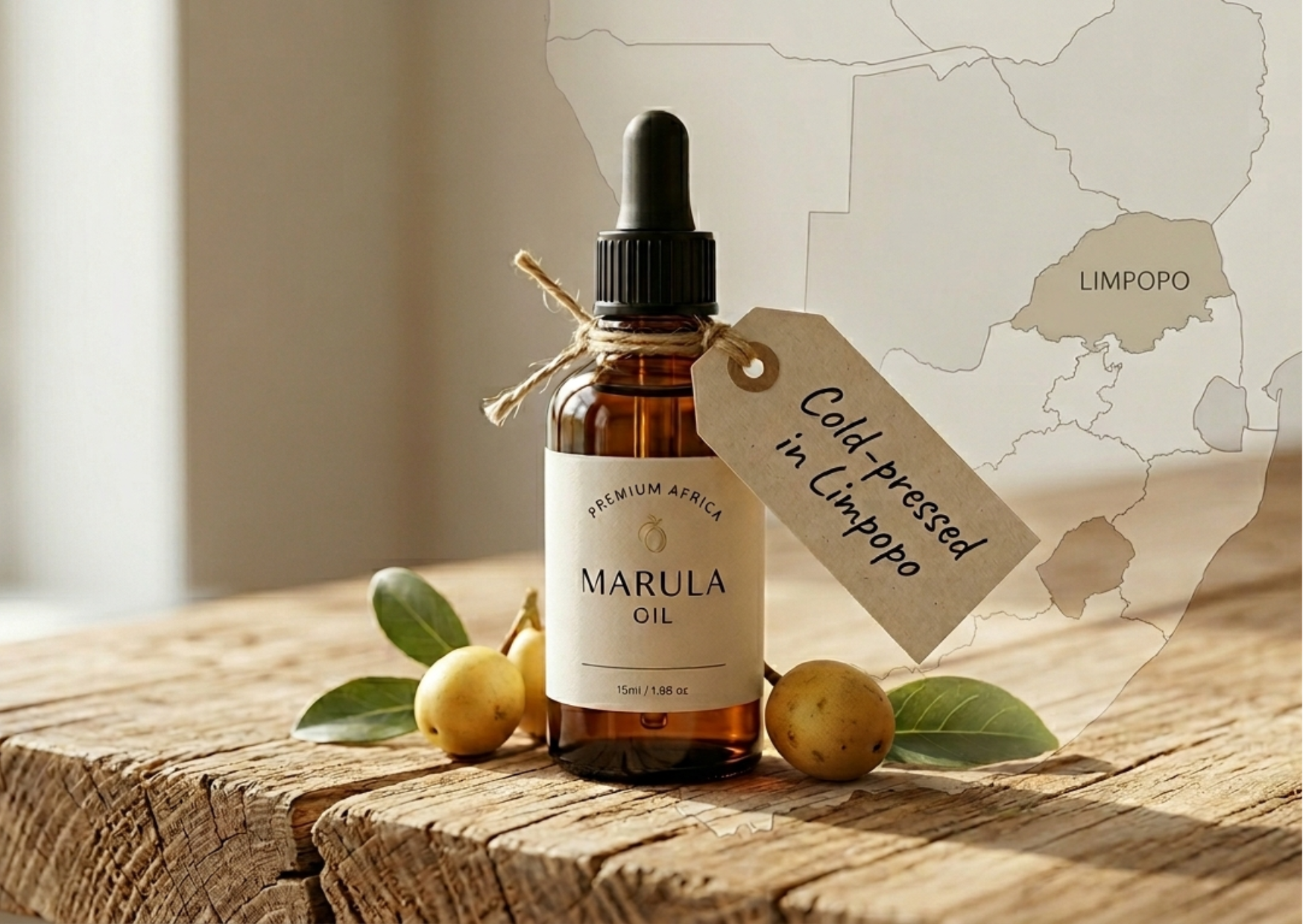
Marula trees grow wild across savannah landscapes from Limpopo to the borders of Mozambique and Botswana. For generations, indigenous communities understood the value of the Marula not just for food and ceremony, but for skin and body care – a practice long before global cosmetic labels took notice.
The oil from Marula seeds is rich in antioxidants, omega fatty acids and vitamins that deeply nourish and hydrate skin without leaving a heavy, greasy feel. Its fast absorption and stable composition make it a favourite for both skin and hair formulations.
Sustainability at the Heart of Marula Harvesting
What makes Marula oil truly compelling is its sustainable, community-oriented sourcing:
- Marula trees grow wild without irrigation or intensive agriculture, coexisting with local ecosystems.
- Fruit harvesting largely depends on natural falling and seasonal picking, helping to protect tree health and biodiversity.
- In regions like South Africa’s Limpopo, organised harvesting projects partner with indigenous communities, creating seasonal employment and fair revenue sharing.
- Programs like the Marula SA initiative embed indigenous knowledge protection and biodiversity conservation into commercial value chains.
This stands in contrast to some large-scale oil industries where commercialisation can overshadow local rights and sustainability.
A Southern African Story and the Ethics of Extraction
As Marula’s popularity grows, some large-scale processes have shifted the balance away from traditional, locally rooted production. International technologies such as CO₂ extraction offer efficiency and high yields, but they also change the chemical profile and importantly, the human story behind the oil.
At Afrika Botanicals we believe method matters. We champion cold-pressing because it:
- Preserves nutrients: Cold-pressing avoids solvents and extreme heat, helping retain volatile antioxidants and omega fatty acids.
- Keeps value local: Cold-pressing enables processing close to where the trees grow, for example, in Limpopo – so the “Southern African story” becomes real economic opportunity, not just marketing.
The transition from Argan to Marula is not merely a swap of fatty acid profiles; it is a shift toward a more resilient and transparent beauty philosophy. While the Moroccan Argan industry navigates the complexities of heavy government regulation and environmental strain, Marula offers a return to wild-harvested purity.
By choosing Marula seed oil from Southern African sources, you are rejecting the “industrialisation” of nature. While others may opt for the clinical, detached efficiency of Israeli CO2 extraction, local procurement commitment to traditional cold-pressing in Limpopo ensures the oil’s soul remains intact. This method does not just preserve the potent antioxidants your formulations require; it preserves the economic heartbeat of the Southern African communities who have lived in harmony with the Marula tree for centuries.
Ultimately, Marula seed oil is not merely another option, it is the benchmark. Rooted in indigenous knowledge and harvested in ways that sustain ecosystems and communities, Marula seed oil sets the highest standard for botanical luxury: fast-absorbing, nutrient-rich and unmistakably effective. Choosing Marula seed oil means choosing regenerative sourcing, authentic origin and uncompromised quality, luxury skincare that truly honours the people and places behind it, while leaving the skin ethically radiant and deeply nourished.